
3D foot scan at Sport Giese: what is measured and what you get from it
Free, about ten minutes, booked online: what the 3D foot scan measures, how it helps you choose shoes and what it is not.
By Sport Giese Redaktion ·

The 3D foot scan at Sport Giese is a free measurement of your feet that takes about ten minutes. The scan itself needs around 60 seconds, and you receive the results by email afterwards. It helps you choose running shoes or insoles that match the shape of your feet. It is not a medical examination.
Why isn't shoe size enough?
Shoe size only describes the length of the foot. Two feet of the same length can differ clearly in width, volume and shape: one is narrow with a high instep, the other wide at the forefoot with a low arch. In the same size, the same shoe won't fit both.
On top of that, running shoes from different manufacturers are cut differently. One model may be generous at the forefoot and snug at the heel, another the other way round. If you know the shape of your feet, you can choose more precisely and need to try on fewer pairs.
What does a 3D foot scanner measure?
A 3D scanner captures the foot as a three-dimensional model, not just as an outline. Common devices measure, among other things, the length and width of the foot, the height of the arch, the volume and the position of the ball of the foot. From these values you can tell whether a foot is rather narrow or wide, rather flat or high-arched.
The comparison between left and right is important. Many people have two feet of different sizes. The shoe then has to fit the larger foot, not the smaller one.
The scan doesn't replace trying shoes on. It tells you which shoe shapes are worth considering. Whether a shoe feels good only becomes clear when you walk in it and take a few running steps.
How does the scan help you choose between neutral and stability shoes?
The shape of the arch is one piece of the puzzle when deciding whether a neutral shoe or a stability shoe suits you better. A low arch does not automatically mean you need a stability shoe, though. What matters is the overall picture and how the shoe feels when you run. What lies behind the terms is explained in Neutral or stability?.
Two types of shoe that are easy to compare side by side: the ASICS Gel-Kayano 33 for men and the ASICS Gel-Kayano 33 for women combine stability with plenty of cushioning and are designed for long distances. The Brooks Ghost 18, by contrast, is a neutral running shoe with a DNA Loft v3 midsole. If you wear both types one after the other, you'll usually feel the difference within a few steps.
Stability and neutral compared
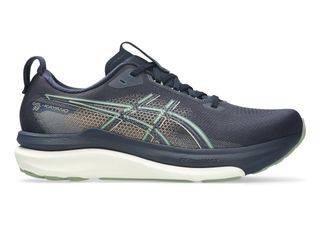 AsicsGEL-KAYANO 33 Beigefrom200,00 €in stock
 AsicsGEL-KAYANO 33 Weißfrom200,00 €in stock
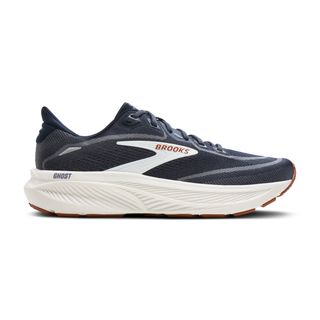 BrooksGhost 18 Navy Blazer/Red Earth/Bluefrom150,00 €in stock
What the 3D foot scan is not
The scan is a service for choosing shoes. It makes no diagnosis and does not replace a visit to a doctor or orthopaedic specialist. If you have pain when running or walking, have it checked by a doctor. You are welcome to take the measurements along to such an appointment.
The 3D scan measures the foot while you stand, so it is static: length, width, volume and arch shape. On its own it can't tell how your foot rolls when you run, meaning pronation in motion; that is what a gait analysis observes. For the question of which shoe shape fits, the scan is the quicker route.
How does an appointment work?
- Pick a time in the calendar on sportgiese.de and enter your details.
- The team calls you and confirms the appointment in person.
- The scan itself takes around 60 seconds.
- Together you go through the values and which shoe shapes are worth considering.
- The results arrive by email. Custom insoles can also be made on request.
Allow about ten minutes in total for the scan, more if you want to try on shoes afterwards. The scan is free of charge.
What do you get out of the scan?
The biggest benefit shows up when you buy later on. If you know that your foot is wide at the forefoot or that your left foot is longer than your right, you rule out unsuitable models faster. That saves fittings in the store and returns when you order from the online shop.
Keep the results from the email. When you look for your next running shoe in two years' time, you have a starting point and don't have to begin from scratch. If something changes, for example because you run a lot more or your shoes suddenly fit differently, a new appointment makes sense.
What should you bring to the appointment?
Bring your old running shoes. The wear on the sole shows where you land and how your foot rolls, and it complements the measurement. Also bring the socks you run in. A thick winter sock and a thin running sock make a noticeable difference in the same shoe size.
If you don't have running socks yet, you could pick the X-Socks Run Perform Crew for men or the X-Socks Run Discover Ankle for women and wear them straight away for the fitting. That way the shoe will later fit exactly the sock you actually run in.
Running socks for the fitting
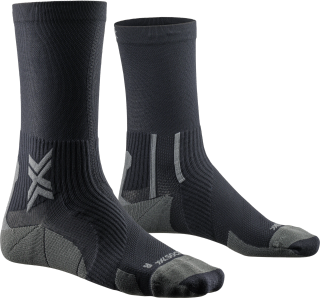 X-SocksX-socks® RUN Perform Crew Schwarzfrom26,00 €low stock
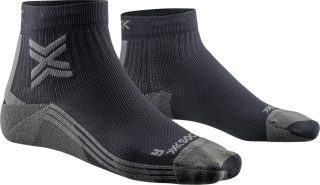 X-SocksX-socks RUN Discover Ankle WMN Black/charcoalfrom20,00 €in stock
Who benefits most from the scan?
- Beginners buying their first running shoe who have no experience yet with sizes and shapes.
- Runners whose current shoes pinch, slip at the heel or are too tight at the front.
- Anyone with wide or very narrow feet. Pointers on wide models are in Running shoes for wide feet.
- Runners who want to switch brands for the first time in years.
How to turn the results into a concrete choice of shoe is shown in Which running shoes are right for me?.
Just before your appointment: checklist
- Choose an afternoon slot if you can.
- Pack your old running shoes.
- Bring your own running socks.
- Note your weekly kilometres and surfaces: road, forest track, trail.
- Give an email address you actually read: that is where the results go.