
Neutral or stability shoes? What pronation means when buying running shoes
Pronation, overpronation, supination: what the terms mean, how neutral and stability running shoes differ and how to choose between them.
By Sport Giese Redaktion ·

Pronation is the natural inward roll of the foot after it lands. Neutral shoes leave this movement largely alone; stability shoes guide it with firmer elements in the sole. Which type suits you isn't decided by a single measurement but by the overall picture and, above all, by how the shoe feels when you run.
What is pronation?
When you run, your foot usually lands on its outer edge and then rolls slightly inwards. The arch gives a little and absorbs part of the load. This movement is called pronation, and it is normal. Every runner pronates; the only question is how much.
Three terms come up again and again when you buy running shoes:
- Neutral pronation: after landing, the foot rolls slightly inwards.
- Overpronation: the arch moves further down and inwards on landing than usual.
- Underpronation or supination: the opposite, the foot tends to roll over its outer edge.
These terms describe a movement pattern, not a condition. If you have pain when running, have it checked by a doctor or orthopaedic specialist. A running shoe cannot replace a diagnosis.
How can you tell how your foot rolls?
The sole of your old running shoes gives a first clue. Put them on a table and look at them from behind and from underneath.
- Wear mainly on the inner edge, towards the ball of the big toe, points to a stronger inward roll.
- Wear mainly on the outer edge, towards the little toe, points to supination.
- If the shoe, standing on the table, tilts clearly inwards or outwards, the midsole has been compressed on one side.
This is a pointer, not a finding. Wear on the inner edge alone is not a reliable sign of overpronation, because running style, surface and shoe model also shape the wear pattern. The shape of your foot can also be measured with the free 3D foot scan at Sport Giese. It takes about ten minutes; more on it in 3D foot scan: what is measured.
What is a neutral running shoe?
A neutral shoe has a midsole without additional supporting elements. It cushions but barely interferes with how the foot rolls. It is the usual choice for runners with a neutral gait, and also for many runners who tend to roll over the outer edge.
Three examples: the ASICS Gel-Cumulus 28 for women offers a soft landing and a flexible roll on different surfaces. The Brooks Ghost 18 is a neutral shoe with a DNA Loft v3 midsole for daily runs and longer distances. The Hoka Clifton 11 is particularly light and uses Meta-Rocker geometry, a curved sole that makes the heel-to-toe roll easier.
Neutral shoes
 AsicsGel-cumulus 28 Black/taro Purplefrom160,00 €in stock
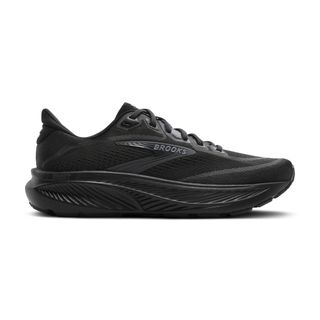 BrooksGhost 18 Black/Black/Ebonyfrom150,00 €in stock
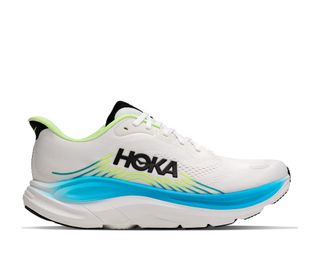 Hoka1176572 Flck M Clifton 11 Flckfrom160,00 €low stock
What does a stability shoe do differently?
A stability shoe has elements that guide the inward roll. Depending on the manufacturer, these are firmer zones on the inner side of the midsole, side guides or a support system at the midfoot.
The ASICS Gel-Kayano 33 for women combines stability with plenty of cushioning and is designed for longer sessions. The Brooks Adrenaline GTS 25 uses the GuideRails system, which according to Brooks looks at the whole chain from the feet to the knees and limits excess movement within your natural motion. The men's Nike Structure 26 has a midfoot support system that wraps the arch and heel, combined with a full-length ReactX midsole.
Stability shoes
 AsicsGEL-KAYANO 33 Weißfrom200,00 €in stock
 BrooksAdrenaline GTS 25 Oyster/Green Gecko/Bluefrom160,00 €low stock
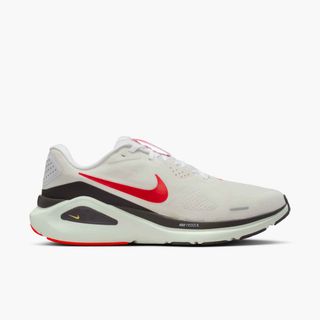 NikeNike Structure 26 Men"s Road R Weißfrom139,99 €low stock
Do you always need a stability shoe if you overpronate?
No. Overpronation alone does not decide the type of shoe. Some runners with a stronger inward roll get on well with neutral shoes; others feel more secure in a stability shoe. The height of your arch doesn't automatically decide the shoe type either. What matters is the overall picture of body weight, mileage, surface and fatigue, and how the shoe feels when you run.
A practical test: in the shop, run a few metres in a neutral shoe and in a stability shoe from the same manufacturer, ideally in the same size. If the stability shoe feels like a foreign body or presses on the inside, it isn't automatically the right one, even if your old shoe is more worn on the inside. If the neutral shoe feels wobbly at the end of a longer run, more guidance may feel better.
You can also check the difference with your hands. Squeeze the midsole on the inside under the arch and then on the outside. On many stability shoes the inside feels firmer; on neutral shoes both sides give in a similar way. The test only shows how the shoe is built, not whether it suits you. You'll only find that out when you try it on and run a few steps in it.
What about insoles and orthotics?
If you wear insoles, bring them to the fitting, because they change the room and feel inside the shoe. Make sure the running shoe's own insole can be taken out. Whether prescribed orthotics should be combined with a neutral or a stability shoe is something to settle with the doctor or orthopaedic specialist who prescribed them. Medical questions aren't decided by the shoe.
How should you go about buying?
Put the steps in order: fit first, then the shoe type, and colour and brand last. A stability shoe that pinches helps nobody. The other criteria for choosing, from surface to cushioning, are in Which running shoes are right for me?. If you also have wide feet, you'll find suitable models in Running shoes for wide feet.
Checklist: neutral or stability
- Look at your old running shoes: where is the sole most worn?
- Have your feet measured if you're unsure.
- Run in one neutral and one stability model from the same manufacturer, side by side.
- Pay attention to how it feels, not just to the label.
- Bring your own insoles and running socks to the fitting.
- If you have pain, don't just change shoes: have it checked by a doctor.