
The football kit bag: checklist for training and matchday
What goes in a football (soccer) kit bag? Checklist for training, matchday and winter, plus which bag with a boot compartment suits kids and adults.
By Sport Giese Redaktion ·

Every football (soccer) kit bag needs boots that suit the pitch, shin pads (shin guards), football socks, training kit, a full water bottle, a towel and a change of clothes. On matchday, add your shirt, tape or sock ties in the colour of your socks and possibly a second pair of boots. In autumn and winter, you also need a rain jacket, base layer tights and gloves.
This checklist is meant to be ticked off: for parents who pack the bag with their child, and for adults who drive straight from work to the pitch. At the end there is a short list to print out.
What should always be in a football bag?
You need these things at every training session, whether on grass, artificial grass or indoors:
- Football boots (soccer cleats) with the right soleplate for the pitch. If you switch between grass and artificial grass, you will find the right sole in artificial grass: studs or moulded studs?.
- Shin pads that reach from the ankle to just below the knee.
- Football socks or training socks, plus a spare pair.
- Training top and shorts; in the cold, base layer tights and a training jacket.
- Water bottle, filled before you leave.
- Towel, shower gel, sliders (flip-flops), clean underwear.
- A bag for wet and dirty things.
- For goalkeepers: goalkeeper gloves in a bag of their own.
Which football bag is the right one?
The right football bag has a separate boot compartment so that mud and rubber crumb from artificial pitches do not get onto clean clothes. The size depends on age: a compact bag is enough for small children, while adults with a change of clothes and two pairs of boots need more room.
The Jako Iconic sports bag comes in three sizes: Bambini at 45 × 24 × 37 cm, Junior at 55 × 27 × 41 cm and Senior at 65 × 30 × 44 cm. It has a 12 cm high bottom compartment and a deep zipped wet compartment. The PUMA teamGOAL Teambag M holds 55 litres at 65 × 32 × 29 cm, with a boot tunnel, a valuables pocket and a side mesh pocket for the bottle. The Erima Intro sports bag with bottom compartment keeps boots or wet clothes separate in the bottom compartment and has an inner mesh pocket for a water bottle and small items. For children who cycle to training, a backpack is more comfortable: the Jako Iconic backpack has a separate 10 cm high bottom compartment and padded shoulder straps.
Bags with a boot compartment
 JakoSporttasche Iconic Blaufrom44,99 €low stock
 PumateamGOAL Teambag M Puma Blackfrom44,95 €low stock
 ErimaIntro sportsbag with bottom ca blackfrom39,99 €low stock
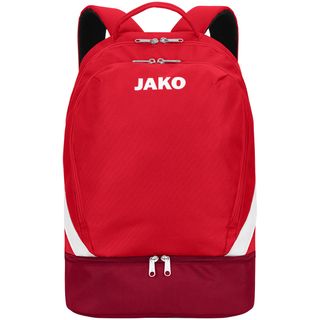 JakoRucksack Iconic Weißfrom29,99 €low stock
If you also use the same bag for the gym, you will find tips on compartments and size in the gym bag guide.
What do you need on matchday?
On matchday, the main additions are the things the rules require and that often cause trouble before kick-off. Law 4 of the Laws of the Game says shin pads must be covered by the socks, and tape visible on the outside must be the same colour as the part of the sock it covers. Jewellery is not allowed, and taping over it is not permitted; the simplest solution is to leave it at home.
- Club shirt, shorts and socks, if the club does not provide them.
- Tape or sock ties in the colour of the socks.
- Spare laces.
- A second pair of boots if it is unclear whether the match is on grass or artificial grass.
- A small snack for the journey home.
The Jako water bottle holds 750 ml, has a wide opening for filling and cleaning and a screw cap; according to Jako, it is not suitable for fizzy drinks. The Jako sock tie is a 25 mm wide band with Velcro that keeps the socks up; it comes in white and red to match the sock colour. More on the rules and the size of shin pads is in shin pads: size, fastening and the rules.
Small items for matchday
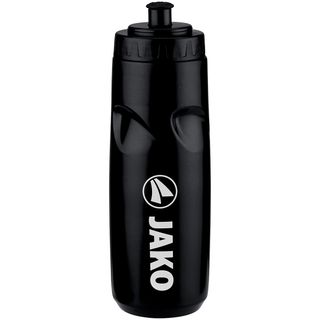 JakoTrinkflasche Blaufrom5,99 €in stock
 JakoStutzenhalter weissfrom7,99 €low stock
What extra do you need in autumn and winter?
From October to March, football in the Eifel often means rain, wind and cold evenings under floodlights. That is when a jacket against rain and wind, base layer tights and gloves go in the bag. The Jako Team 2.0 all-weather jacket is wind- and water-repellent, has a hood and a longer back, and comes in children's sizes. The Jako Long Tight Function is a long technical base layer with flat seams, worn under the shorts. The Jako Function player gloves have a non-slip coating on the fingertips. For warming up, the Erima Liga Star training trousers with zipped side pockets and a tapered calf section are practical.
For cold and wet days
 JakoAllwetterjacke Team 2.0 Blaufrom39,99 €in stock
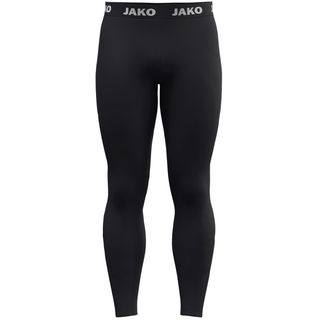 JakoLong Tight Function Blaufrom22,99 €in stock
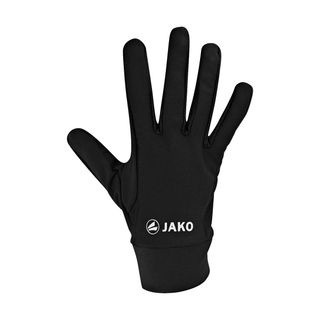 JakoFeldspielerhandschuhe Funktion schwarzfrom19,99 €in stock
 ErimaLiga Star training pants blackfrom27,99 €in stock
How can children pack their own bag?
Children learn to pack more easily with a fixed order and a list that is always in the same place. Stick the checklist from the end of this article on the inside of the bedroom door or in the lid of the bag. Pack together at first and let your child tick off each item out loud; after a few weeks they will take over on their own, and you only need a quick look. Fixed places help: boots always in the boot compartment, shin pads always in the same side pocket, the bottle always in the mesh pocket. Then less goes missing at training, and unpacking afterwards is just as quick.
What should you do with the bag after training?
Unpack the bag straight after every training session. Boots, shin pads and gloves should air-dry, not in the closed bag and not on the radiator. Reusch, for example, states explicitly for goalkeeper gloves that direct heat from radiators can damage the material. How to clean boots after a muddy game is explained in caring for football boots.
Checklist to print
- Boots (soleplate to match the pitch), shin pads, football socks.
- Training kit; in the cold, base layer tights, a jacket and gloves.
- Water bottle, filled.
- Towel, shower gel, sliders, change of underwear.
- A bag for wet things.
- On matchday: shirt, tape or sock ties in the sock colour, spare laces, leave jewellery at home.
- After training: unpack everything and let it air-dry.