
Recreational and veterans' football: boots and clothing you really need
What do recreational football (soccer) players really need? One pair of boots (cleats) for grass and 3G, one for indoors, shin pads and kit for Eifel rain and cold.
By Sport Giese Redaktion ·

For recreational football (soccer), you need one pair of moulded boots that suit the pitch you play on most, for example with an FG/AG or MG soleplate for grass and artificial grass, a pair of flat-soled indoor shoes for the winter, shin pads (shin guards) and technical clothing that can get wet. If you play in an Alte Herren side (a veterans' team in a German club) in organised matches, the same equipment rules apply to you as to everyone else. Expensive pro models are not necessary.
Many people return to football after years away: with colleagues on a Thursday evening, with the veterans at the village club or in a sports hall in winter. This guide sorts out what you really need for that, and what can wait.
Which football boots suit recreational players?
For recreational players who play on natural and artificial grass, a moulded boot (soccer cleat in the US) with a hybrid soleplate (FG/AG or MG) is often a good compromise. If you play almost only on artificial grass, choose an AG sole; what counts is the surface, the pitch rules and the brand's information on the model. Nike describes MG soles as suitable for most surfaces, except indoor courts and concrete. You will rarely need screw-in studs, and they are banned on many artificial pitches anyway. If you are coming back after a long break, focus on fit and comfort, not on the lightest model.
The PUMA King Liga FG/AG has a universal fit that, according to PUMA, adapts to the shape of the foot, a light OrthoLite insole and conical studs for firm ground and artificial grass. The Nike Tiempo Maestro Academy FG/MG has an upper made of FlyTouch, a synthetic material Nike describes as particularly soft; for grass and artificial grass. The adidas Copa Mundial with a kangaroo leather forefoot is the classic for firm ground. The Jako RS89 Team FG/AG is a moulded boot made in Europe for natural and artificial grass.
For grass and artificial pitches
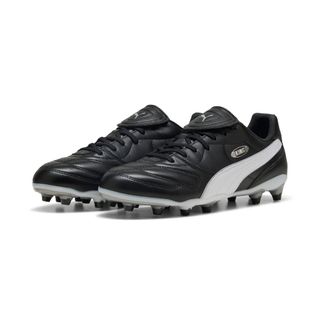 PumaKing Liga Fg/ag Puma Black-puma Silver-puma WHfrom99,95 €low stock
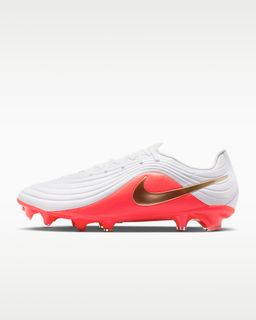 NikeTiempo Maestro Academy Fg/mg Weißfrom84,99 €in stock
 AdidasCopa Mundial Ftwwht/blackfrom180,00 €in stock
 JakoRs89 Team Fg/ag schwarz/weissfrom119,99 €low stock
Which soleplate belongs on which pitch is explained in artificial grass: studs or moulded studs?. Leather gives over time and needs a little care; synthetic simply wipes clean.
What do I need for indoor football and hard pitches?
Indoors, you need shoes with a flat rubber sole (IN, IC or IT); for kickabout pitches and old, hard artificial grass, TF shoes with lots of small rubber studs are the right choice. PUMA describes indoor soles as made for grip and comfort on hard surfaces. Many sports halls require non-marking soles.
The adidas F50 Hyperfast Club IN has an abrasion-resistant, non-marking rubber outsole. The Mizuno Morelia Sala Pro IN has a microfibre synthetic leather upper and a full-length midsole for more cushioning. According to PUMA, the PUMA King 21 IT in soft leather is designed for indoor training and the street. For hard outdoor pitches, the Nike Mercurial Superfly 10 Club TF has a rubber outsole for turf.
For indoors and hard pitches
 AdidasF50 Hyperfast Club IN Ftwwht/solpur/solturfrom60,00 €low stock
 MizunoMorelia Sala PRO IN White/Black/Chinese Redfrom90,00 €low stock
 PumaKing 21 IT Puma Black-puma White-gumfrom74,95 €low stock
 NikeSuperfly 10 Club TF Gelbfrom69,99 €in stock
Do recreational players need shin pads?
In organised matches, yes; in a casual kickabout, it is your decision. Law 4 of the Laws of the Game lists shin pads as compulsory equipment; that also applies to veterans' matches run by the football association. The ban on jewellery applies there too, wedding rings included; taping over them is not permitted. There is no requirement for a casual game with colleagues, but light slip-in pads hardly get in the way. Size and fastening are explained in shin pads: size, fastening and the rules.
What should I wear for rain and cold?
In the Eifel, you often play from October to March in rain, wind and single-digit temperatures. Layering has proved its worth: a close-fitting technical shirt under the match shirt, a training top over it for the warm-up, and a jacket against wind and rain for breaks and the walk to the car.
The PUMA Liga Baselayer long-sleeve top has a slim fit in polyester and elastane (spandex) with dryCELL, PUMA's label for breathable, quick-drying fabrics. The Erima Liga Star training top with a short zip and chin guard is quick to pull on. The Erima Liga Star training trousers have a close-fitting calf section with a zip at the hem. The Jako Team hooded coach jacket is wind- and water-repellent, padded and lined with fleece, for breaks on the touchline.
For cold and wet evenings
 PumaLiga Baselayer Tee LS Puma Blackfrom39,95 €low stock
 ErimaLiga Star training top slate grey/blackfrom46,99 €low stock
 ErimaLiga Star training pants blackfrom32,99 €in stock
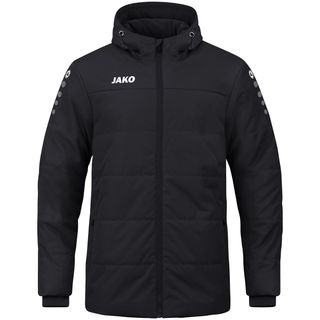 JakoCoachjacke Team mit Kapuze Blaufrom109,99 €in stock
A simple shirt is enough for a casual game; the Jako Team shirt in technical polyester comes in plain colours that also work for a matching team kit. What else goes in the bag is listed in the football bag checklist.
What does proper care do for recreational players?
Recreational players often play once a week, but in all weathers, and after the game they like to head straight to the pub. That is exactly when wet boots stay overnight in the bag in the car boot. Take two minutes after the game: knock off the dirt, take the boots out of the bag at home, stuff them with paper and let them dry away from the heating. Use care products only to suit the material and as the brand recommends. How to do this in detail and how to work out the cost per session is covered in caring for football boots.
What can wait?
Pro boots with screw-in studs, a second pair of grass boots, compression gear or expensive match shirts are not necessary when you start. You are better off investing in a well-fitting boot for the pitch you play on most and in a jacket that keeps the rain out. Try boots on in the afternoon and with match socks, so that the fit is right in the game too. You can always add more later, once you know which pitches your group plays on regularly and what you missed in your first winter.
Checklist for getting back into football
- One moulded boot to suit the pitch you play on most: FG/AG or MG for grass and artificial grass, AG for artificial grass only.
- Indoor shoes with a non-marking sole for the winter, TF shoes for hard pitches.
- Shin pads, compulsory in organised matches; take off jewellery and wedding rings.
- Technical shirt, training top, training trousers, a jacket against wind and rain.
- Wear new boots in training first, not in the first match.
- If you have problems after playing, get them checked by a doctor.