
Cycling rain jackets: waterproof, windproof and easy to see
How to spot a good cycling rain jacket: waterproof or just water-repellent, a dropped tail, hood, reflective details and the right waterproof trousers.
By Sport Giese Redaktion · ·

A rain jacket for cycling has to be waterproof, not just water-repellent, and it needs a cut designed for the riding position: a dropped tail, sleeves long enough for your reach and cuffs that seal at the wrist. Add taped seams, so no water gets through the stitching, and bright or reflective areas, because rainy weather almost always means poor visibility.
Waterproof or water-repellent: what's the difference?
Water-repellent means the fabric has been treated so that drops bead up and roll off. That is enough for a short shower, but in steady rain the water eventually soaks through. Waterproof means a membrane or coating holds water back even under pressure, and the seams are taped.
This is measured as the hydrostatic head (waterproof rating) in millimetres. The fabric is stretched under a filled measuring cylinder; the height of water at which the first drops come through is the hydrostatic head. Manufacturers often state it in millimetres; retailers frequently quote 1,300 mm as the lower limit for waterproof, but that is not a binding rule. The European standard for protective rainwear, formerly EN 343 and now replaced by EN ISO 24232:2025, uses classes for resistance to water penetration and for breathability instead. On a bike, the headwind drives the rain against your chest and thighs as well, so ratings well above that lower limit are common. More on the hydrostatic head in rain jackets for hiking.
Breathability matters just as much. You sweat on the bike even in the rain. If your jacket is wet inside, it is often not the rain but your own sweat that cannot get out fast enough.
Which rain jacket works for the daily commute?
For commuters, what counts is protection that also works in an upright position and while you wait at a red light. The Craft Core Bike Ride Hydro Lumen Jacket is built as a commuter cycling jacket: windproof and waterproof 2-layer fabric rated WP 8000 / MVP 8000, taped seams, an adjustable hood, a dropped tail and longer sleeves. In the usual reading, WP 8000 stands for a hydrostatic head of 8,000 mm and MVP 8000 for vapour permeability in grams per square metre per day. The jacket also comes in a second version, also in black; reflective elements make it visible in the dark.
If you prefer something lighter: the CMP women's jacket in fluorescent yellow is waterproof and windproof, made of stretch fabric with Dry Function. The CMP men's jacket in fluorescent yellow weighs just 50 g/m² in its fabric, is waterproof and windproof and packs into its own pocket. Both come from our running range, but their colour and small pack size make them handy on the bike too. What commuters need besides the jacket is covered in Cycling to work.
Waterproof jackets
 CraftCore Bike Ride Hydro Lumen JAC Blackfrom€139.95low stock
 CraftCore Bike Ride Hydro Lumen JAC Blackfrom€139.95low stock
 CMPWoman Jacket Yellow Fluofrom€59.95in stock
 CMPMAN Jacket Yellow Fluofrom€59.95low stock
Is a wind jacket enough instead of a rain jacket?
In dry, cold weather and short showers, yes. A wind jacket is lighter, breathes better and fits in your jersey pocket. In steady rain it will not keep you dry. The Craft Essence Light Wind Jacket is ultralight, windproof and water-repellent thanks to a DWR treatment, has vents in the sweat zones and packs down small. It is a good jacket for changeable days, but not a rain jacket for an hour of steady rain.
A halfway option is the CMP 2-in-1 jacket in fluorescent yellow: windproof, with a water-repellent treatment, detachable sleeves and a zipped back pocket on the dropped tail.
For showers and wind
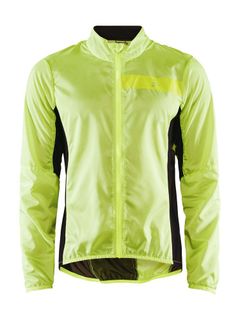 CraftEssence Light Wind JKT M Fluminofrom€89.95low stock
 CMPMAN Jacket With Detachable SLE Yellow Fluofrom€74.95low stock
What else do you need to stay dry, apart from the jacket?
In the rain, your thighs and feet get wettest on a bike, because the spray from the front wheel and the road hits exactly there. The CMP men's rain trousers are waterproof trousers (rain pants) that are light, tough and fold into their own side pocket. They have a loose cut, an elastic waistband and zips at the hems, so you can pull them on over your normal trousers without taking your shoes off. Tuck in or fasten the right leg tightly so it does not get caught in the chain.
For your feet there are overshoes (shoe covers): the Craft Shelter Bootie is wind- and water-repellent, with taped seams, neoprene at the front and reflective prints. Mudguards (fenders) on the bike keep off a lot of spray; they belong on the bike, not in your wardrobe. For longer rides, see what to wear for bike tours around Bitburg and Prüm.
Legs and feet
 CMPMAN Pant Rain Nerofrom€22.95low stock
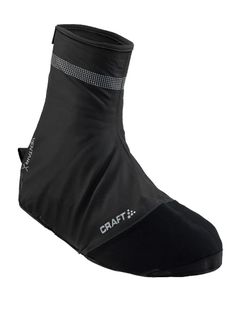 CraftCraft Shelter Bootie Blackfrom€49.95low stock
Why should a cycling rain jacket be bright or reflective?
Because rain, spray and misted-up windscreens severely limit what drivers can see. A black jacket disappears into the grey of the road at dusk. Fluorescent yellow works by day, reflective areas work in headlights. The rules for lights and reflectors on bikes in Germany, and how clothing helps, are covered in being seen on the bike.
How does a rain jacket stay waterproof?
The water-repellent finish on the outside wears off over time. Once water stops beading and starts soaking into the fabric, restore it with a waterproofing spray. The German cycling magazine Radfahren advises against wash-in reproofers, because they also reach the inside of the jacket and reduce breathability. The treatment is usually activated with heat, for example in a tumble dryer (dryer) at 30 °C or with a warm iron; the care label tells you what your model can take. More in washing and caring for cycling clothing.
Checklist: a rain jacket for the bike
- Waterproof with taped seams, not just water-repellent.
- A dropped tail and sleeves that do not ride up in the riding position.
- A hood that fits under your helmet or can be stowed away.
- A bright colour or reflective areas at the front, back and on the arms.
- Vents or breathable fabric against moisture from the inside.
- For longer trips: waterproof trousers and overshoes as well.