
Waterproof hiking boots: membrane, tread and when they are worth it
When hiking boots with GORE-TEX or another membrane pay off, when a leather boot without a membrane is better, and what matters in the tread.
By Sport Giese Redaktion ·

Waterproof hiking boots are worth it for anyone who hikes in spring, autumn and winter, and for almost every hike in the Eifel. A membrane in the lining keeps water out and lets water vapour escape. In high summer, and if you sweat a lot, a shoe without a membrane can be more comfortable.
How does a membrane in a hiking boot work?
The membrane is a thin layer built in between the upper and the inner lining. Its pores are too small for water droplets but large enough for water vapour. Rain cannot get in from outside, while your sweat can escape as vapour.
The best-known membrane is GORE-TEX, recognisable by the letters GTX in the model name. Many manufacturers have their own membranes, for example CMP with Clima Protect. One important point: the membrane sits on the inside. For it to breathe, the outer material must not be soaked through. That is why even a GORE-TEX boot needs a DWR treatment; more on that in Caring for and reproofing hiking boots.
When is a waterproof hiking boot worth it?
Whenever your feet are in contact with wet ground for a longer time: wet grass in the morning, puddles on forest tracks, mud after rain, slush in winter. In the Eifel that is normal from October to April, and in summer after every thunderstorm.
Low-cut shoes with a membrane have two typical uses: walks and easy hikes on paths, and everyday wear in wet weather. The LOWA Ventierra GTX LO has a GORE-TEX membrane, a cushioning DYNAPU midsole and an integrated sole stiffener for extra stability; for women there is the Ventierra GTX LO Ws. The Meindl Jamaica GTX combines suede and mesh with a GORE-TEX lining and the Multigrip G6 sole. The CMP Rigel 2.0 Low uses the brand's own membrane: Clima Protect, a TPU insert in the midsole and the FullOnGrip rubber compound.
Low-cut shoes with a membrane
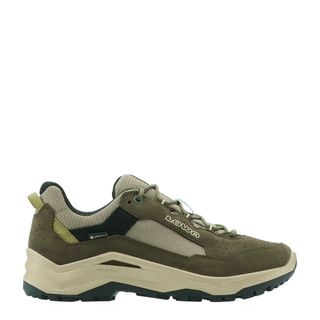 LOVENTIERRA GTX LO oliv/bernsteingrünfrom160,00 €low stock
 LOVENTIERRA GTX LO Ws Sonstigefrom160,00 €low stock
 MeindlJamaica GTX noirfrom179,90 €in stock
 CMPRigel 2.0 LOW Trekking Shoes W Nero-greyfrom89,95 €low stock
When is a boot without a membrane the better choice?
A membrane has two drawbacks. First, on hot days a shoe with a membrane can feel warmer and less airy, because the extra layer lets less air and moisture through. Warmth in winter, on the other hand, comes from insulation and from enough room for a thicker sock, not from the membrane. Second, water that has run in over the top of the boot can only get out again slowly. If you wade through a stream or walk in persistent rain without gaiters, you end up with a wet foot in a sealed boot.
An alternative for long hikes is a leather boot with a leather lining. The Meindl Borneo 2 MFS has an upper of waxed nubuck, a leather lining instead of a membrane and a Vibram sole. Well-greased leather keeps rain out for a long time and dries slowly but completely after the hike. This is the classic solution for people who hike a lot in summer and do not like membranes.
Gear in this guide
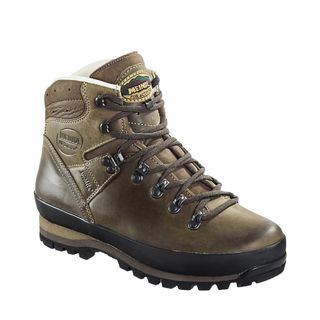 MeindlBorneo 2 MFS braun/nougatfrom269,90 €low stock
Low-cut or ankle-high: which keeps you drier?
An ankle-high boot keeps out far more water because its edge sits higher. You stay dry walking through tall wet grass and slush, where water would run over the edge of a low-cut shoe. For winter hikes and long stages a mid boot is therefore the safer choice.
The Meindl Quebec Mid GTX and the Quebec Lady Mid GTX are ankle-high boots in suede and mesh with a GORE-TEX lining and the AIR-ACTIVE Wellness Sport footbed. Sportier is the Salomon X Ultra 360 Mid GTX: a GORE-TEX membrane, a grippy outsole and a mid-height fit which, according to Salomon, gives extra ankle protection on technical trails and longer hikes.
Ankle-high with GORE-TEX
 MeindlQuebec Mid GTX marine/limefrom199,90 €low stock
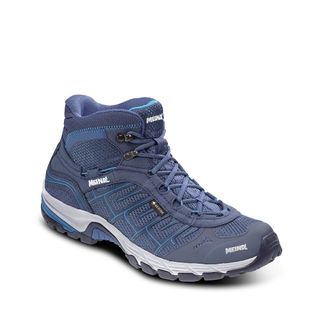 MeindlQuebec Lady Mid GTX blau/petrolfrom199,90 €in stock
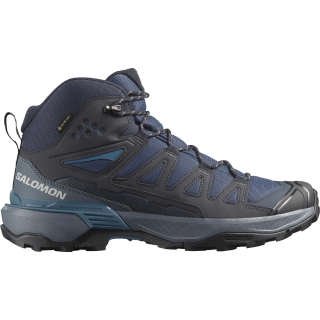 SalomonX ULTRA 360 MID GTX Blue Nights/Dark Navy/Dark Bluefrom165,00 €low stock
What matters in the tread?
Being waterproof is of little use if you slip on wet ground. On Eifel forest paths with leaves, clay and roots, three things count:
- Deep, widely spaced lugs that mud cannot clog. A smooth tread quickly turns into a skid pad on clay.
- A pronounced heel edge for descents. It bites when you walk downhill on wet grass.
- A soft, sticky rubber compound for rock and roots. Manufacturers call it, for example, Contagrip, Vibram or FullOnGrip.
A worn tread is a common reason why older hiking boots suddenly feel unsafe. Check the soles before every season. If you only walk on surfaced paths, the tread can be shallower; for the Eifelsteig, with its rocky sections, it should be aggressive, see Eifelsteig: which boots and which jacket.
How does a waterproof boot stay waterproof for longer?
GORE-TEX advises not to wash membrane footwear in the washing machine, to dry it at a moderate temperature away from direct heat, and to renew the DWR treatment as soon as water no longer beads off. For membrane shoes the manufacturer recommends a water-based waterproofing spray and explicitly not wax or grease, because they reduce breathability.
Quick decision: membrane or not?
- You mostly hike from autumn to spring: membrane.
- You often walk through wet grass or snow: membrane and an ankle-high upper.
- You mostly hike in high summer and sweat a lot: no membrane, or leather with a leather lining.
- You want one boot for everything in the Eifel: ankle-high with a membrane and an aggressive tread.