
Winter hiking in the Eifel: how to stay warm and dry
Winter hiking in the Eifel in mud, snow and wind: which boots, jacket, gloves and hats keep you warm, and how to plan the hike.
By Sport Giese Redaktion ·

To stay warm and dry in an Eifel winter, you need waterproof ankle-high boots, ideally with a warm lining, an insulated waterproof jacket or a rain jacket over a warm mid layer, plus a beanie, gloves and a neck warmer. What is typical in the Eifel is less deep snow and more mud, drizzle and cold wind on the hills. Plan shorter hikes, because it gets dark early.
What is winter weather in the Eifel like for hiking?
The Eifel winter is often wet rather than snowy. Temperatures are frequently around freezing, paths are muddy, frozen in the morning and soft again by midday. On the heights of the Schneifel (Schnee-Eifel), the high ridge near Prüm where the Schwarzer Mann reaches 697 m, there is snow more often than in the valleys. At the winter sports centre there are about 5 km of signposted, cleared winter hiking trails and around 10 km of groomed cross-country ski trails.
Before you drive up, you can find out whether there is snow at the Schwarzer Mann by calling the snow hotline on +49 6551 4422. For families who also want to ski there, we have a separate guide: Skiing at the Schwarzer Mann.
Which boots do I need for winter hikes?
Winter hiking boots have to do three things: keep water out, keep you warm and grip on snow and frozen ground. An ankle-high upper keeps slush out. A membrane alone keeps you dry but not particularly warm; boots with a warm lining are more comfortable in a prolonged frost.
The Merrell Siren 4 Thermo Mid Zip WP is a women's winter boot with 200 g SOLARCORE insulation and a zip for getting it on and off quickly. The Wolverine Thermo Akita Mid WP is an ankle-high boot which, according to its model name, is insulated (Thermo) and waterproof (WP); check the lining when you try it on. If you want to wear your trusted hiking boot in winter too, a mid model with GORE-TEX such as the LOWA Renegade EVO GTX Mid serves you well combined with thicker wool socks.
Boots for mud and snow
 MerrellSiren 4 Thermo MID ZIP WP Tobaccofrom210,00 €low stock
 WolverineThermo Akita Mid WP Sonstige Hauptfarbefrom140,00 €low stock
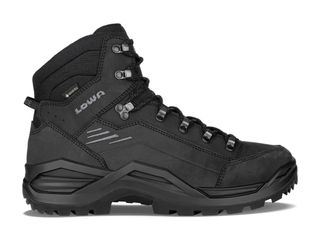 LORenegade EVO GTX MID Tiefschwarzfrom230,00 €low stock
Important: thicker socks need room. A boot that fits with thin socks in summer can become too tight with winter socks, and a tight boot keeps you less warm. More on membranes in Waterproof hiking boots.
Which jacket keeps you warm and dry in winter?
You have two options. Either an insulated waterproof jacket that combines warmth and weather protection in one garment. Or the layering system of base layer, fleece and rain jacket, which adapts better to how hard you are working. For gentle winter walks the insulated jacket is more convenient; for longer hikes with climbs, the layering system is better, see Layering for hiking.
According to CMP, the CMP UNLIMITECH women's jacket has a membrane with a 15,000 mm hydrostatic head, a breathability of 10,000 MVP and light padding of 80 g/m². The CMP women's jacket with HighLoft padding has a Clima Protect membrane and fully sealed seams. The CMP 3-in-1 men's jacket is versatile: the padded inner jacket zips out, the outer jacket with Clima Protect laminate keeps the rain off, and both can be worn on their own.
Winter jackets for hiking
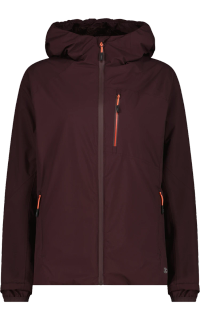 CMPWoman Jacket FIX Hood Black Berryfrom89,95 €low stock
 CMPWoman Jacket FIX Hood Nero-antracitefrom99,95 €low stock
 CMPMAN Jacket ZIP Hood Detachable Black Bluefrom159,95 €low stock
What do I need for my head, neck and hands?
Your head, neck and hands are the most exposed to the wind, and the right items weigh almost nothing. Better to pack one pair of gloves too many than one too few: wet gloves stop keeping you warm.
The Areco stretch glove has a rubberised palm for a secure grip, touchscreen fingertips for your phone and a long cuff. The Areco liner cap is thin enough to wear under a beanie or hood, wicks moisture and dries quickly. A CMP neck warmer made of recycled polyester protects your neck. For breaks, an insulated Dare 2b thermal mug with 1.2 litres of tea fits in the backpack.
Small items that make a big difference
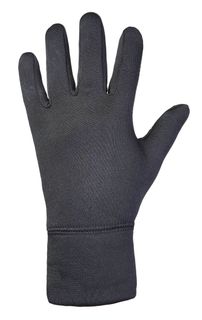 ArecoHandschuh Weißfrom24,99 €in stock
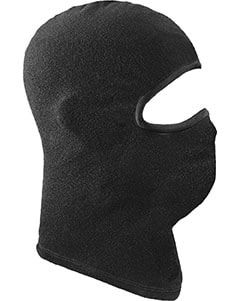 ArecoUnterziehhaube Weißfrom16,99 €low stock
 Dare 2bThermInsulMug12L Blaufrom40,00 €low stock
Which trousers and socks should I wear in winter?
Ordinary hiking trousers soon feel cold on the legs in winter, especially in the wind. Two solutions have proved themselves: lined softshell trousers, or light hiking trousers with thermal leggings (long johns) underneath. In slush and wet grass, trousers with a membrane or waterproof trousers (rain pants) on top keep your knees dry.
As for socks: one pair of thick wool socks is better than two thin pairs on top of each other. Two pairs slip and make the boot too tight. In winter always take a second pair in a bag, so you can change at lunch if your feet have got damp.
How do I plan a winter hike?
- Plan shorter: in December it gets dark by late afternoon. Start early and expect a slower pace on mud and snow.
- Choose paths that are easy to walk even when wet. Steep paths over roots and rock are slippery in winter.
- Check the weather and snow conditions the day before; for the Schwarzer Mann, use the snow hotline.
- Keep breaks short and put on a warm layer before you stop.
- A head torch (headlamp), a charged phone and a first-aid kit always belong in the backpack.
How do I dry boots and clothing after the hike?
After the hike, take out the insoles and open the lacing wide. GORE-TEX recommends drying membrane footwear at a moderate temperature and not directly next to a heat source, so not on the radiator or in front of the stove. Newspaper stuffed inside absorbs moisture and should be replaced after a few hours. More on this in Caring for and reproofing hiking boots.